
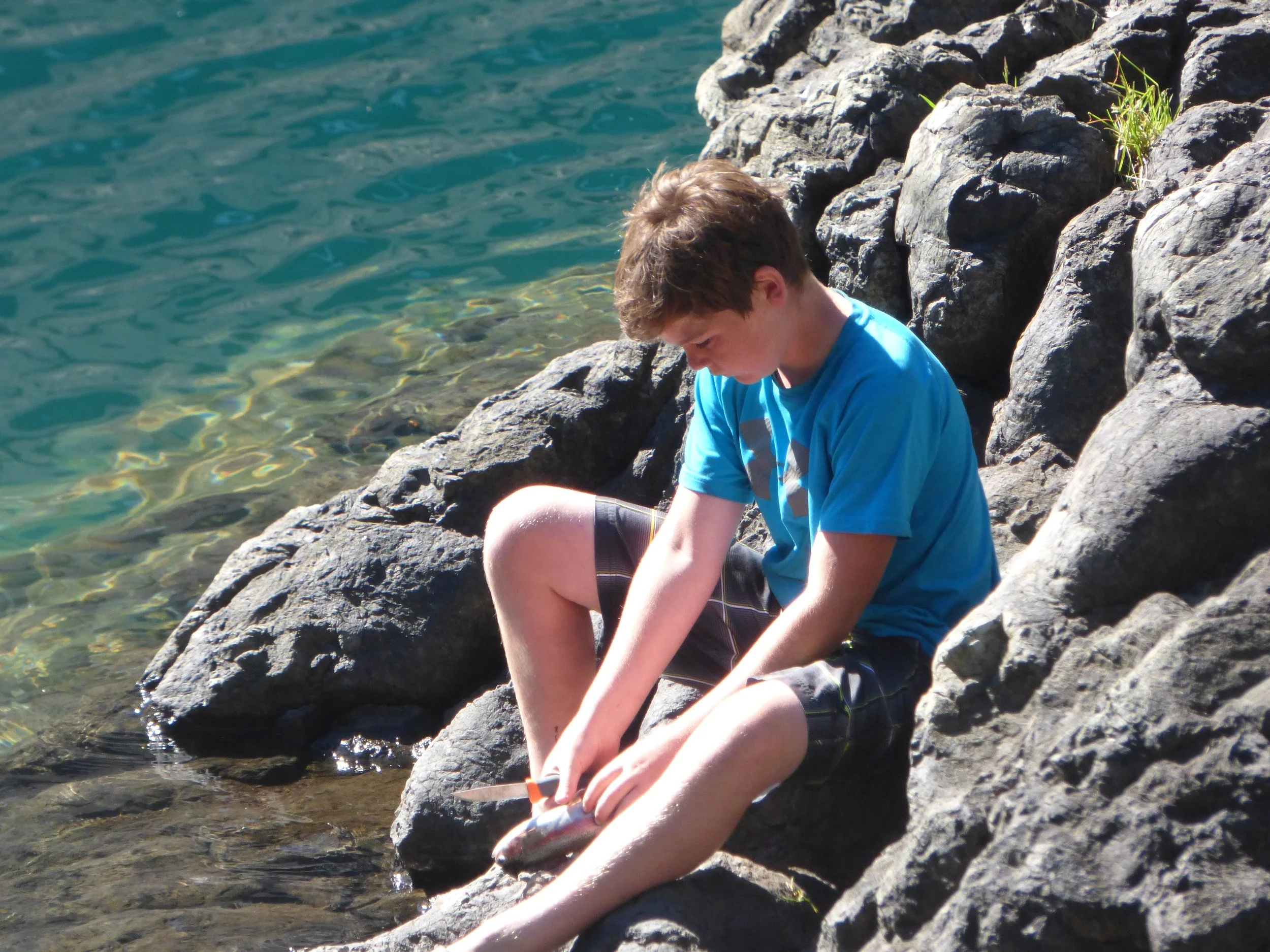
Way Finder Teen Program (Ages 12–15)
2026-27
Join a community of young teens ready to explore the outdoors, build wilderness skills, and grow through adventure, friendship, and connection with nature.
Wayfinder is an immersive weekend program designed for youth ages 12–15 who are excited to learn by doing, challenge themselves, and spend meaningful time outside alongside supportive mentors and peers. Through hands-on experiences in wild places, students build confidence, resilience, awareness, and a deeper sense of belonging.
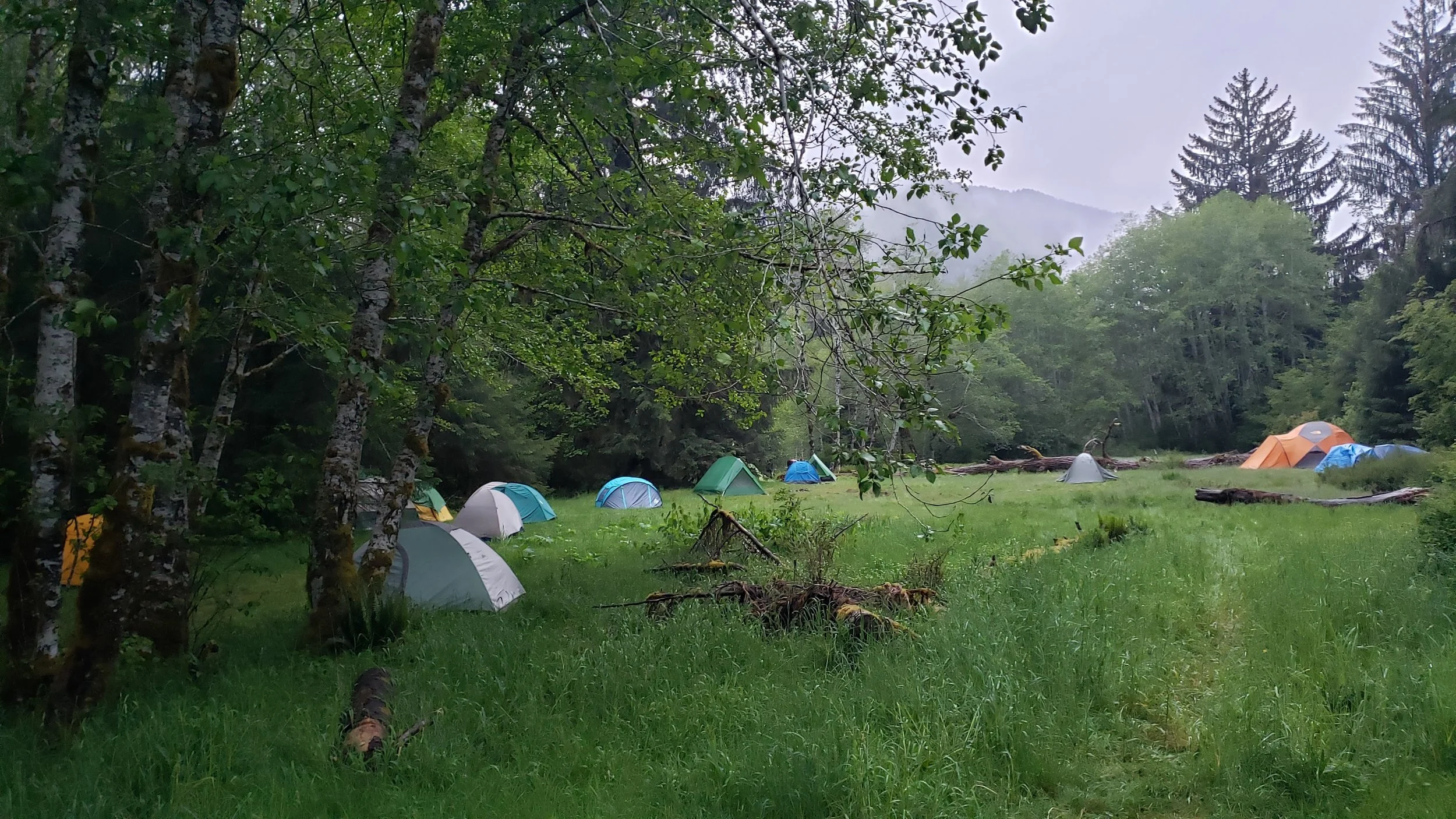
Weekends take place both at our forest campus in Port Townsend and in natural areas throughout the Olympic Peninsula. Together, students practice outdoor living skills, nature observation, games, storytelling, teamwork, and community building while learning to feel at home in the natural world.
Topics covered:
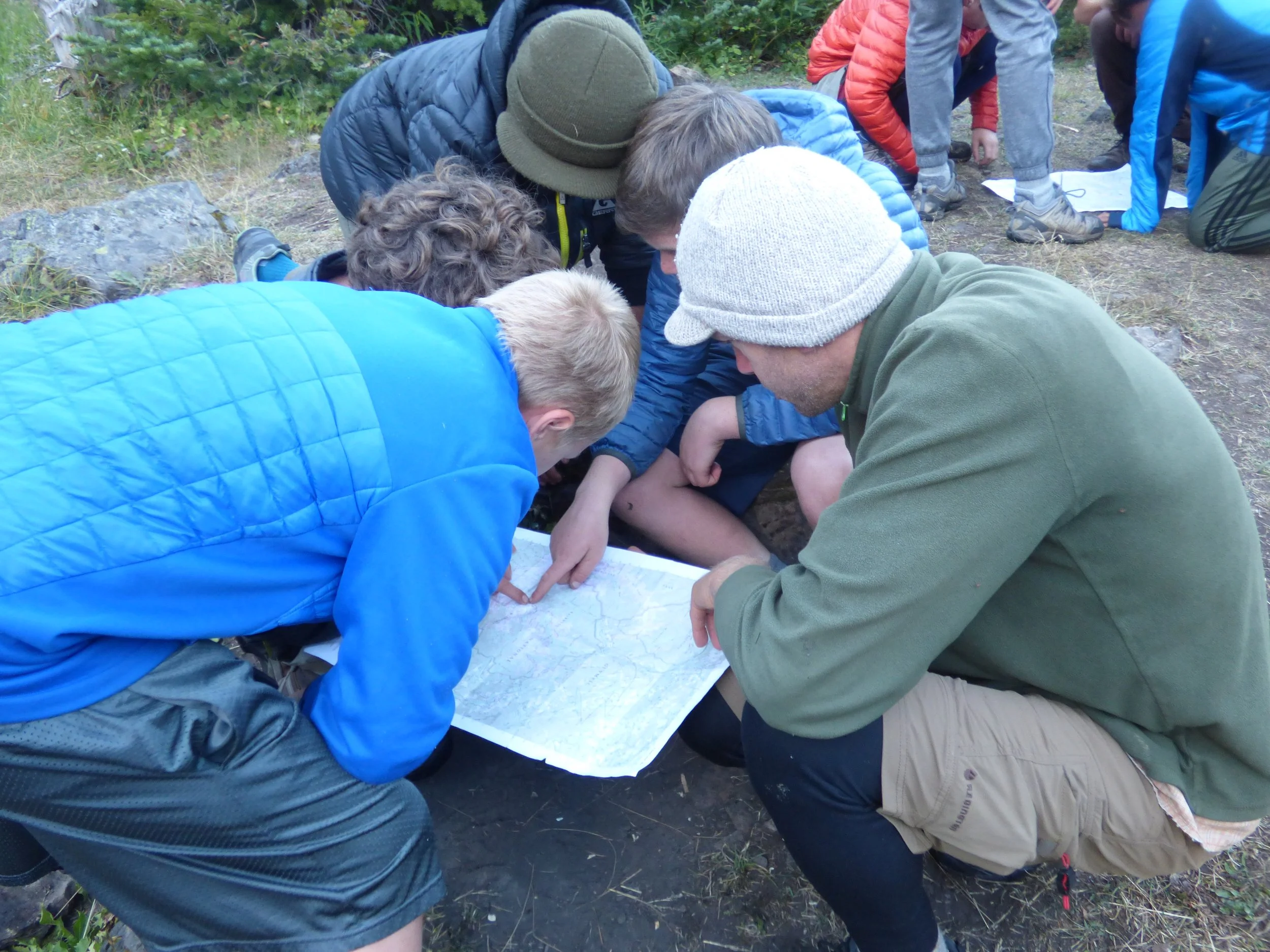
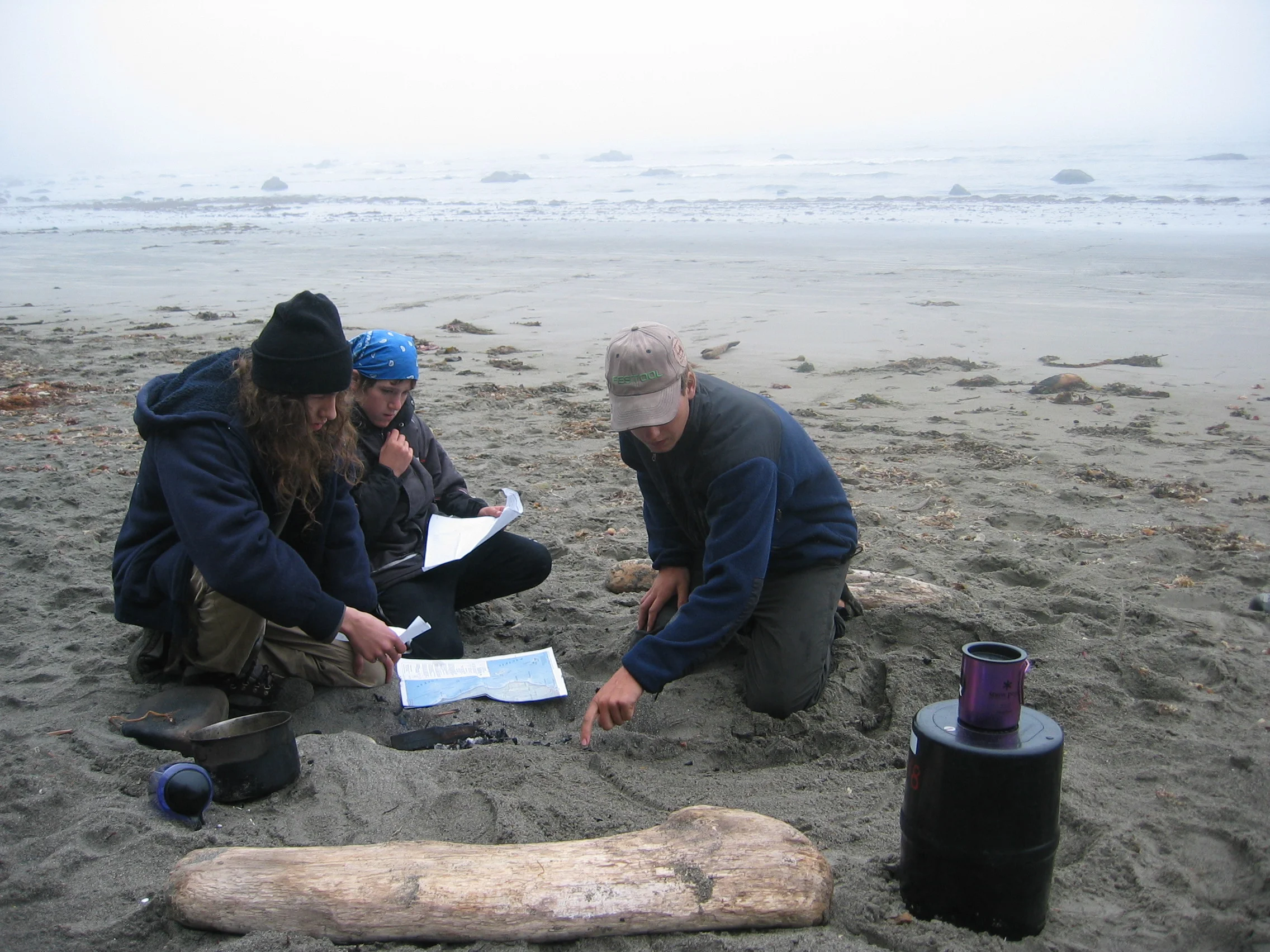
Way Finder Students
practicing topographic map and compass work
What Students Will Experience
Students develop practical skills and confidence through direct experience, including:
Fire-making and shelter building
Wilderness living and outdoor survival skills
Wildlife tracking and animal awareness
Bird language and nature observation
Identification and uses of edible and medicinal plants
Safe navigation on and off trail
Leadership, communication, and teamwork skills
Community building, problem-solving, and personal growth
Our programs encourage students to slow down, pay attention, and build a deeper relationship with the ecosystems around them while discovering their own strengths, creativity, and capabilities.
Program Logistics
Programs run Friday at 6pm through Sunday at 3pm
Weekends take place either:
at areas in and around Port Townsend (students provide transportation)
at expedition locations on the Olympic peninsula (CedarRoot will provide transportation)
Instructors provide detailed meeting information before each program weekend
CedarRoot School provides Saturday dinner
Students bring all other meals and snacks
We may not be able to accommodate all dietary needs; please contact instructors after registration with specific questions
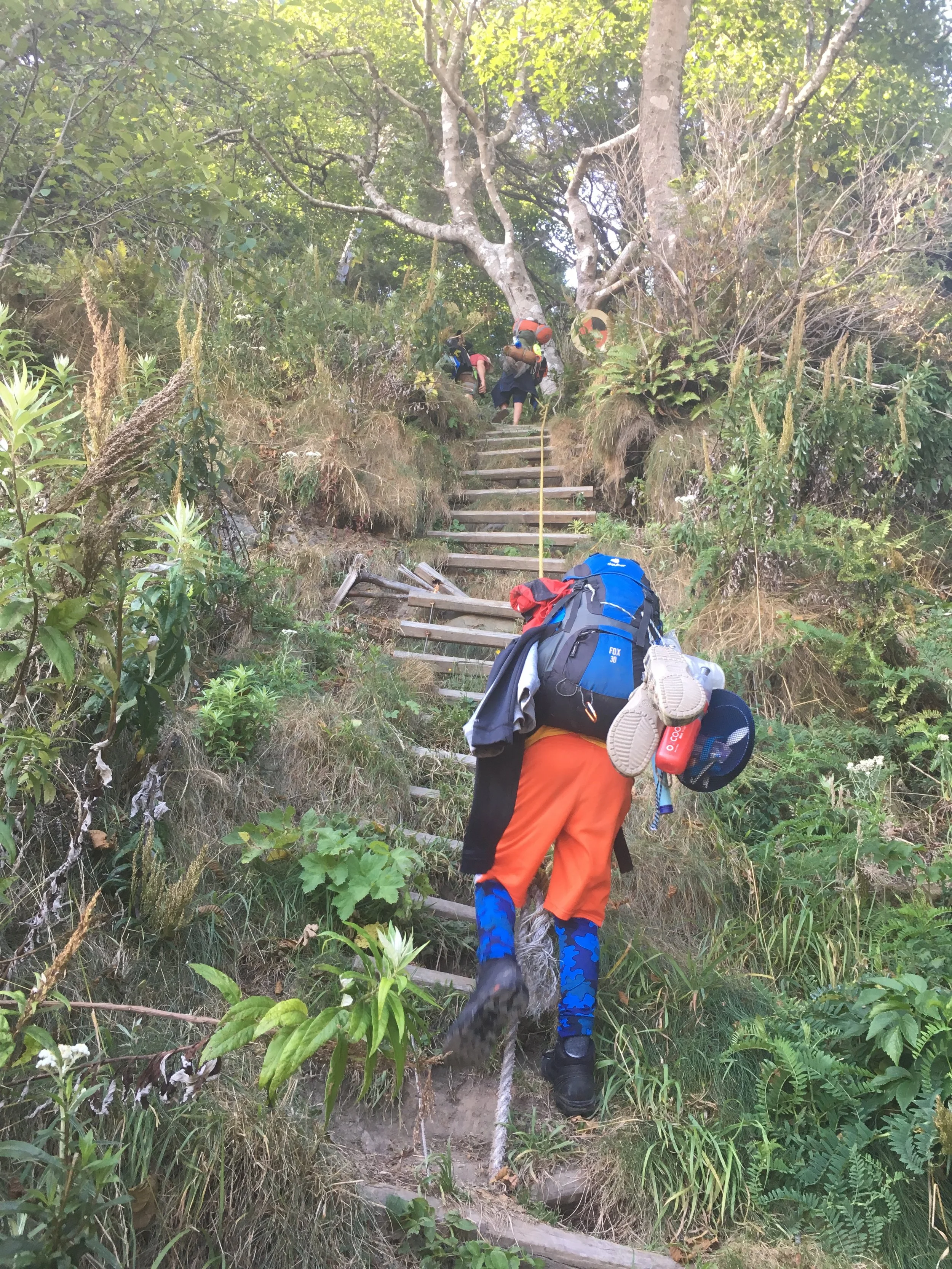
Several opportunities to overcome physical challenges while exploring
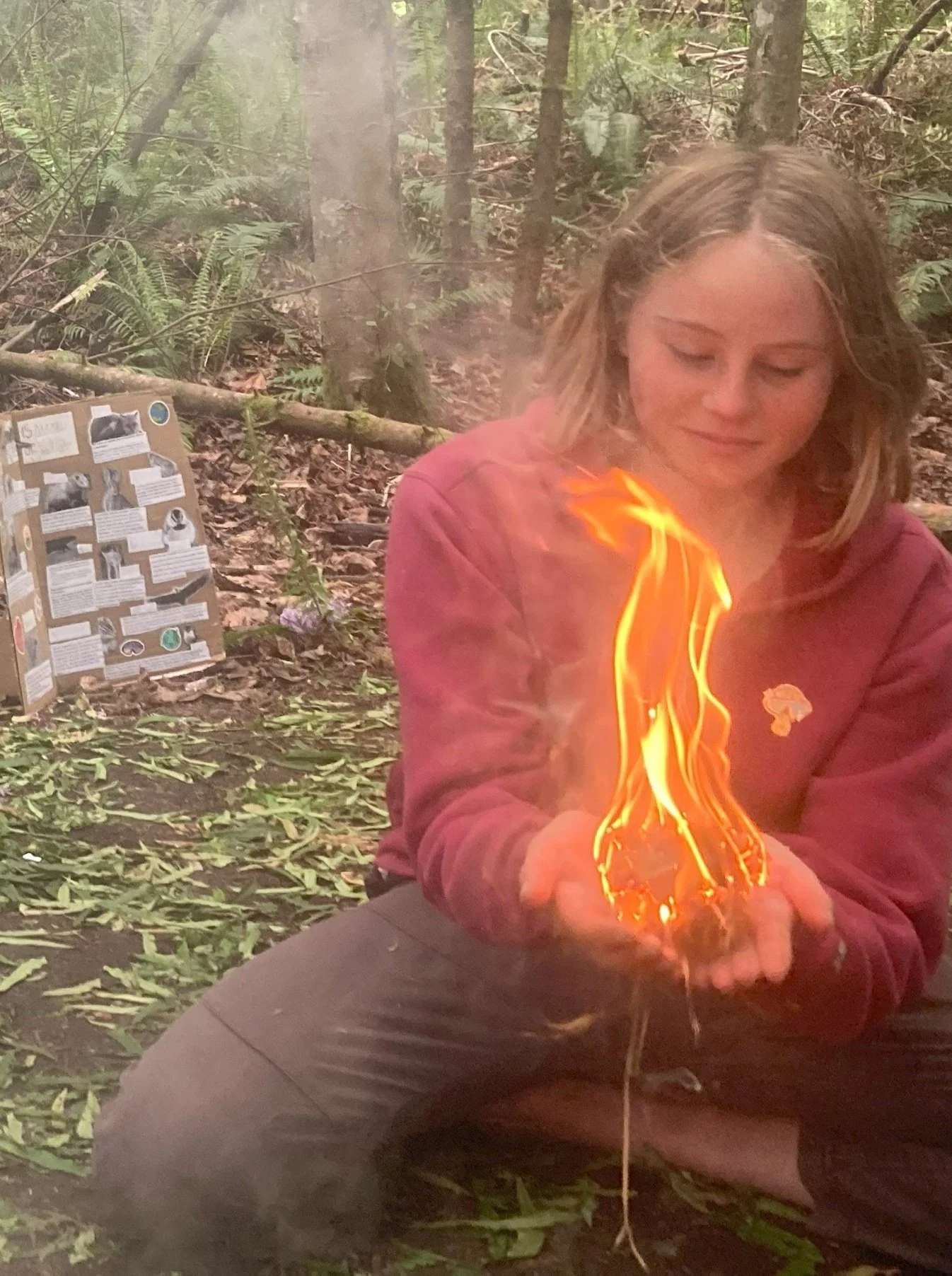
Our Educational Approach
At Cedar Root School, we believe meaningful learning happens through curiosity, relationship, and direct experience. Our mentors guide rather than lecture, helping students discover knowledge through exploration, challenge, and reflection.
Our programs are rooted in
Hands-on, experiential learning in nature
Seasonal and place-based curriculum
Play, exploration, and curiosity-driven discovery
Social-emotional growth within a supportive community
Mentorship that encourages confidence, responsibility, and leadership
Critical thinking and creative problem-solving
We strive to create spaces where young teens feel both challenged and supported as they grow into capable, connected, and confident individuals.
2026–2027 Program Dates
Wayfinder (Ages 12–15)
Sept 25–27
Oct 16–18
Nov 13–15
Dec 4–6
Jan 29–31
Mar 5–7
Apr 2–4
Apr 30–May 2
All weekends run from Friday at 6pm through Sunday at 3pm.
Cost: $2900 scholarship funding available
Our Mentors
Our instructional team: Ramzy Berbawy and Thuja Noba
Maintain approximately a 1:6 adult-to-student ratio
Includes experienced mentors, volunteers, and apprentice instructors
Holds current Wilderness First Aid and CPR certifications
Brings extensive experience in wilderness skills and youth mentorship
Supports each student with compassion, respect, and encouragement
Meet Your Instructors

Sarah Spaeth
Sarah has a lifetime of exploration of, and connection to the Pacific Northwest, and has worked for Jefferson Land Trust for 28 years helping to preserve the farms, forests and fish habitat of Jefferson County. Her life's work was enriched immeasurably through a wildlife tracking class she took 11 years ago— it opened her eyes fully to the significance of conservation work to the other creatures that share their home with us. Sarah has been studying and teaching wildlife track and sign through the Wilderness Awareness School’s Wildlife Tracking Intensive, and achieved her Track and Sign Specialist Certification in 2020. She is excited to help us learn to read this first script written on the land, telling stories rich in love, mystery, drama and death!

Matt Mahan
Matt became involved with the Olympic Cougar Project several years ago when he lost some livestock to a cougar. Making the choice to kill the cougar and save his sheep weighed heavy on him. Wanting to find different ways to be a better steward of land and wildlife while raising animals, he reached out to Dr. Mark Elbroch for some solutions. They began setting up cellular game cameras and monitoring the area and quickly found out that it was a major wildlife corridor that cougars visited frequently. In a two-year period they had 60+ cougar visits. They were able to collar some of these cougars for the Olympic Cougar Project.
Matt was soon hired by Panthera to manage a camera grid in Jefferson County. He also visits clusters and documents kill sites/bed sites. Additionally, he assists a local filmmaker with camera trapping for a documentary on the project. Matt continues to learn about tracking and trailing as well as ways to protect our apex predators while sharing the land with them.

Scott Brinton
Scott believes the best way to honor our life is to learn as much about the natural world where we reside. Wildlife tracking is an integral part of reading our landscape. He obtained a Masters in Natural History and Education and became an instructor for the Wilderness Awareness School. From 2005-2010 he worked seasonally on a citizen science project collaborating with the Nez Perce tribe in Idaho using track and sign to monitor wolf populations. He currently lends his local knowledge to the Olympic Cougar project. He also serves as the Executive Director of CedarRoot School, where he has taught and organized youth and adult programs teaching hundreds of participants the art of tracking and wilderness skills.
Guest Instructors

David Moskowitz
David works in the fields of photography, wildlife biology and education. He is the photographer and author of three books: Caribou Rainforest, Wildlife of the Pacific Northwest and Wolves in the Land of Salmon and co-author and photographer of Peterson’s Field Guide to North American Bird Nests. He has contributed his technical expertise to a wide variety of wildlife studies regionally and in the Canadian and U.S. Rocky mountains, focusing on using tracking and other non-invasive methods to study wildlife ecology and promote conservation.
David holds a bachelor’s degree in Environmental Studies and Outdoor Education from Prescott College. David is certified as a Track and Sign Specialist, Trailing Specialist, and Senior Tracker through Cybertracker Conservation and is an Evaluator for this rigorous international professional certification program.

Photo courtesy of David Moskowitz
Dr. Mark Elbroch
Mark is a scientist, tracker, writer, and storyteller. His current position is Lead Scientist for the Puma Program for Panthera (www.panthera.org), a global nonprofit focused on wild cat conservation. His research on mountain lions is contributing radical changes to what we thought we knew about the species, especially with regards to their social lives and their keystone roles in ecosystems.
Mark was awarded a Senior Tracker Certificate by CyberTracker Conservation in Kruger National Park, South Africa, after successfully following lions across varied terrain. His certificate was the 17th ever awarded and the first to a non-African. Mark received an honorary Master Tracker Certificate in 2015 for significant contributions to the conservation of tracking knowledge and the trackers themselves. He has also authored 10 books on natural history, including several field guides to animal tracking that won National Outdoor Book Awards.
Banner photograph courtesy of Mark Elbroch
Kitten photos courtesy of Matt Mahan